Ethereum: Why Coinbase Can’t Be Spent?
At first glance, it may seem surprising that Coinbase’s highly liquid cryptocurrency, Ethereum (ETH), cannot be spent on transactions. After all, we’ve seen countless online marketplaces and payment systems use Ether to facilitate buying and selling. However, there is a fundamental reason behind this limitation.
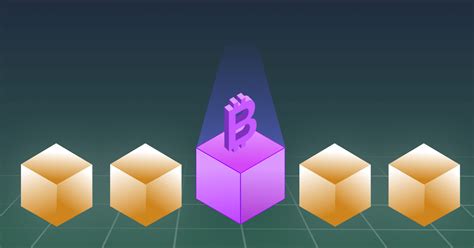
According to the Bitcoin Wiki, which provides detailed information about the Bitcoin network, the genesis block, also known as the “first block of the blockchain,” is special. This block contains the first 50 BTC (Bitcoins) that were mined when the Bitcoin network was created.
The problem lies not in the value or scarcity of Ether itself, but rather in how it was distributed when the block was created. Because of this unique genesis block, the 50 BTC reward for creating each new block is tied to the total number of coins in existence, which is 21 million, rather than being directly transferable.
To understand why, it is important to know that the Bitcoin network is built on a decentralized, open-source protocol called Blockchain. Creating each new block involves solving a complex mathematical puzzle, and when the block is created, a certain number of “difficulty-adjusted” coins must be mined in order for the miner to be awarded the reward.
The problem here is that when the 50 BTC reward was initially issued, it didn’t actually belong to anyone. Bitcoin’s creators (Satoshi Nakamoto) simply distributed the first 50 BTC among themselves as a gesture of generosity and to test the protocol.
As a result, the majority of the 21 million coins in existence remain unused, including Coinbase’s Ethereum holdings. This is because genesis block rewards were designed to be used only to create new blocks on the Bitcoin network, not to directly transfer Ether from one wallet to another.
This fundamental distinction between Bitcoin and Ethereum has important implications for how we interact with these two popular cryptocurrencies. While Ethereum can still be traded on exchanges like Coinbase, its native cryptocurrency cannot be spent or transferred using traditional payment systems due to this unique feature of the genesis block.
Conclusion
In conclusion, the reason why Coinbase’s Ethereum holdings are unspendable has to do with how the genesis block was distributed when the block was created. The 50 BTC reward for creating each new block is directly tied to the total number of coins in existence and is not directly transferable between wallets. This fundamental distinction between Bitcoin and Ethereum highlights the unique nature of each cryptocurrency and how they are designed to function within their respective ecosystems.